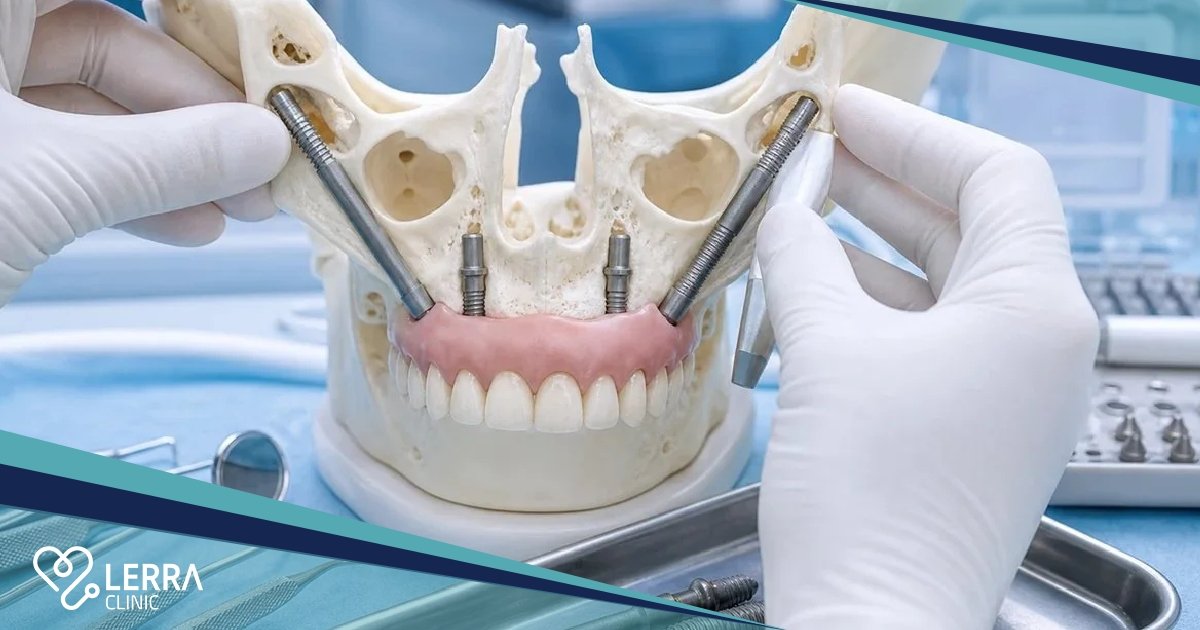
Last Updated: November 2026
The dental implant process in Turkey involves six stages: assessment and imaging, treatment planning, implant placement surgery, the healing period and integration with the jawbone, abutment and crown placement, and follow-up care. The entire process generally takes between three and eight months or longer, depending on the jaw and the patient’s individual condition. The number of trips required also varies depending on the treatment protocol.
The surgical procedures and restorations are performed at licensed partner clinics and hospitals working with Lerra Clinic. This guide explains what happens at each stage and what you should ask before leaving Turkey.
To learn more about the service itself, you can visit our Dental Implants page. This article, however, focuses on the entire treatment journey, step by step.
The information provided here is general and does not replace an examination by the dentist responsible for developing your individual treatment plan.
Table of Contents
What Are the Stages of Dental Implant Treatment in Turkey, in Order?

Stages of Dental Implant Treatment in Turkey
The process begins with an assessment and imaging, followed by treatment planning, implant placement surgery, a waiting period for osseointegration, abutment and crown placement, and finally, regular follow-up appointments. The following table summarizes each stage, its approximate duration, and where it usually takes place.
| Stage | What Happens | Approximate Duration | Usual Location |
|---|---|---|---|
| Assessment and imaging | Medical history, oral examination, panoramic X-ray or CT scan | One visit, sometimes preceded by an initial remote assessment at certain clinics | Remotely, followed by an in-clinic visit |
| Treatment planning | Determining the number and positions of implants and whether bone grafting is necessary | During the same visit | Partner clinic |
| Implant surgery | Local anesthesia, implant placement, and gum suturing | Usually one surgical session | Partner clinic |
| Healing and osseointegration | The implant integrates with the jawbone without being subjected to chewing forces | Three to eight months | Usually in your home country |
| Abutment and crown placement | Exposing the implant if necessary, taking impressions, manufacturing the crown, and fitting it | Approximately a few days to two weeks | Partner clinic |
| Follow-up | Examination of the gums and bite, X-rays, and cleaning | Periodically, as recommended by the dentist | In your home country or through the clinic |
The period between implant surgery and crown placement is the longest stage and often the least clear to patients, as they usually spend this time in their home country, away from the team that performed the surgery.
For this reason, this part of the treatment plan deserves the most careful consideration before travelling.
How Does the Journey Begin: Consultation, Examination, and Imaging?
The process begins with reviewing your medical history, examining your mouth, and taking the necessary X-rays. The dentist then determines whether your jawbone is sufficient to support the implant and whether any gum inflammation or tooth decay needs to be treated first.
The dentist will ask about chronic conditions such as diabetes, blood-thinning medications, osteoporosis medications, and smoking habits, as these factors can affect wound healing and the likelihood of implant success.
They will also examine your gums, neighbouring teeth, and bite alignment, identifying any teeth that cannot be saved and need to be extracted before or during implant placement.
Imaging, meanwhile, forms the foundation of the entire treatment plan.
A panoramic X-ray provides an overall view of both jaws, while a cone beam computed tomography (CBCT) scan provides three-dimensional information about bone height and width, the course of the inferior alveolar nerve, and the position of the maxillary sinus in the upper jaw.
In complex cases, these images are used to design a digital surgical guide that helps the dentist position the implant accurately.
Some clinics offer an initial remote assessment based on photographs and previous X-rays. This can be useful for obtaining a general idea of your treatment needs before travelling, but it does not replace the clinical examination conducted on your first day at the clinic.
After the examination, a treatment plan is prepared. It should include the number and positions of the implants, whether bone grafting or a sinus lift is required, the type of final crown, whether temporary teeth will be provided, and the expected number of visits.
Ask for all these details in writing before making your decision.
What Happens on the Day of Implant Surgery?
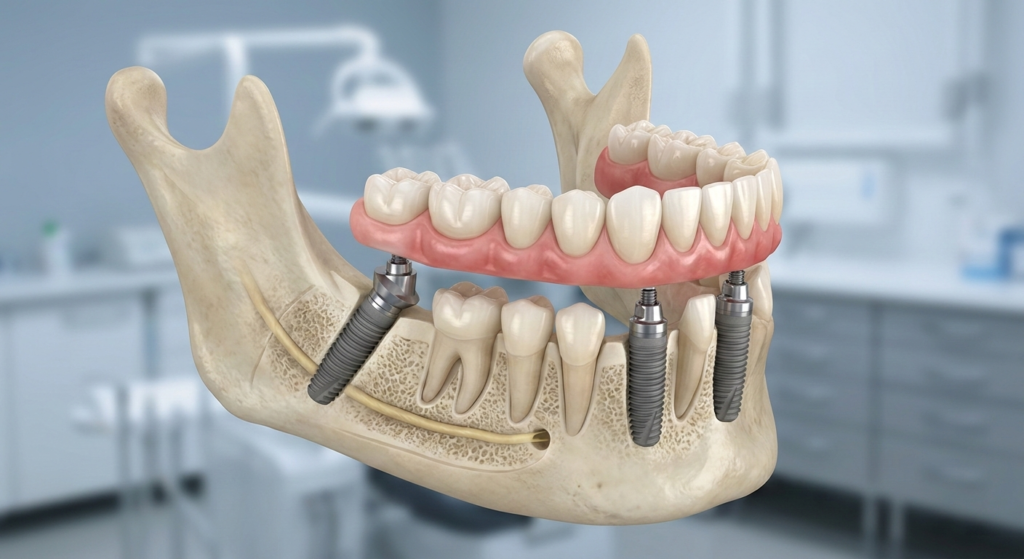
The implant, which is usually a titanium screw, is placed into the jawbone under local anesthesia. The gums are then sutured, and an X-ray is taken to confirm the implant’s position. The duration of the procedure depends on the number of implants and the condition of the jawbone.
The surgery generally follows these steps:
- Local anesthesia is administered to numb the mouth. Sedation may also be offered to patients who feel anxious about the procedure.
- A small incision is made in the gums to expose the jawbone. In some cases, the implant can be placed without making a large incision.
- The implant site is prepared using progressively sized surgical drills until it reaches the planned dimensions.
- The implant is inserted into the bone, and the dentist checks its primary stability.
- A healing cap or healing abutment is placed over the implant, and the gums are sutured.
- An X-ray is taken for confirmation, after which the patient receives post-operative care instructions and prescribed medications.
Patients generally do not experience pain during surgery because of the anesthesia. However, discomfort and swelling are expected once the anesthetic wears off. The dentist will prescribe appropriate painkillers and a mouthwash.
Swelling usually reaches its peak during the first two to three days and then gradually subsides. Bruising on the cheek may also occur.
Non-absorbable stitches are generally removed after approximately one to two weeks, depending on the type of sutures used.
In some cases, temporary teeth can be fitted on the same day, provided the implant has sufficient stability. This procedure is known as immediate loading.
However, this option is not suitable for everyone. The dentist makes this decision based on bone quality and the number of implants being placed.
How Long Does the Healing and Osseointegration Take?
The implant is usually left without bearing chewing forces for three to eight months to allow it to integrate with the bone, according to a Cochrane review published on PubMed. The healing period is generally shorter in the lower jaw because its bone is denser, while it tends to be longer in the upper jaw.
The integration of living bone with the titanium implant surface is known as osseointegration. This process allows the implant to withstand chewing forces later on.
The speed of osseointegration is influenced by bone density, implant location, smoking, diabetes, and oral hygiene.
The same review also examined early and immediate loading. It found no convincing evidence of a clinically significant difference in implant failure or bone loss between immediate and conventional loading. However, the available evidence regarding early loading was considered insufficient to draw a conclusion. This review was published in 2013.
This does not mean that every patient is suitable for accelerated loading. Rather, it means that the timing decision depends on implant stability and the patient’s individual circumstances, rather than following a single universal rule.
To understand how these months are distributed across your trips to Turkey, you can also read our article about the Duration of Dental Implant Treatment in Turkey.
During the waiting period:
- Avoid chewing on the implant site and stick to soft foods during the first few weeks.
- Maintain oral hygiene and clean the area according to the instructions provided by your dentist.
- Avoid smoking, as it is one of the strongest factors associated with impaired osseointegration.
- Send photographs of the area or X-rays if you notice any concerning changes, rather than waiting until your next scheduled appointment.
Is One Trip to Turkey Enough, or Will You Need Two?
This depends on the loading protocol and the condition of your jawbone. With the conventional protocol, you will generally need two trips, separated by several months to allow osseointegration. The number of visits may be reduced in cases where immediate or early loading is clinically appropriate.
The first trip includes the examination, imaging, treatment planning, implant surgery, and a post-operative check-up.
The second trip includes confirming osseointegration, placing the abutment and crown, and adjusting your bite.
If your case requires bone grafting or a sinus lift, an additional healing period may be necessary before the implant itself can be placed.
Do not rely on a general number quoted by any provider. Ask for a written schedule specifying the number of visits and the expected duration of each one before booking your flights and accommodation.
How Are the Abutment and Final Crown Placed?
Once osseointegration has been confirmed through an examination and X-rays, the implant is exposed if necessary, and the abutment is attached. An impression is then taken, the crown is manufactured and fitted, and its bite alignment is adjusted.
The process generally involves the following steps:
- The dentist checks the stability of the implant and the health of the surrounding gums through X-rays and a clinical examination.
- If the implant is covered by gum tissue, a small incision is made to expose it. A healing cap is then placed to shape the gum tissue around the implant over approximately a few days to two weeks.
- An impression of the jaw is taken using either digital scanning or conventional impression materials so that the crown can be custom-made.
- The crown is tried in, and its colour, shape, and height are adjusted.
- The crown is attached to the abutment using either a screw or dental cement, and the bite is checked one final time.
- You are given instructions on daily cleaning and informed of your next follow-up appointment.
Crowns are generally made from zirconia or porcelain-fused-to-metal. Each material offers different advantages in terms of durability and appearance. The dentist selects the most suitable option based on the location of the tooth and the strength of your bite.
The method of crown fixation is also important for long-term maintenance, as a screw-retained crown is easier to remove and maintain than a cement-retained crown.
What Documents and Records Should You Take Home from Turkey?
Before leaving Turkey, make sure you receive your implant identification card, X-rays, surgical report, crown specifications, and written warranty conditions. These are the documents any dentist who follows up on your treatment in your home country will need.
The reason is practical: implant components vary depending on the manufacturer and dimensions. Another dentist cannot safely remove the crown, tighten the abutment, or replace one of its components without knowing the exact implant system used.
These details determine how easily your implant can be maintained over the years.
Make sure you request the following:
- An implant card or document specifying the brand, diameter, length, and batch number of each implant.
- Digital copies of your CBCT and panoramic X-rays taken before and after surgery.
- A signed surgical report and treatment plan.
- Details of the crown and abutment materials, as well as the fixation method.
- Written warranty conditions, including any visits or X-rays required to maintain the warranty.
- A list of medications and aftercare instructions in a language you understand.
- A clear communication channel through which you can send photographs and X-rays if you have any questions after returning home.
What Are the Risks, and Which Warning Signs Require Medical Attention?
Stages of Dental Implant Treatment in Turkey
Dental implant placement is a surgical procedure that carries certain risks. Their likelihood varies depending on the patient’s individual condition. Possible complications include infection, failure of osseointegration, irritation or injury to the nerve in the lower jaw, and complications involving the maxillary sinus in the upper jaw.
The risks increase with smoking, poorly controlled diabetes, inadequate oral hygiene, and untreated gum disease.
Peri-implant inflammation may also develop later if proper oral hygiene is neglected. Alternatively, the abutment screw may become loose and require tightening.
Contact your dentist or treating clinic promptly if you experience any of the following:
- A high fever or chills following surgery.
- Swelling that continues to worsen after the third day instead of gradually subsiding.
- Pus, a persistent unpleasant taste, or an unpleasant smell coming from the surgical site.
- Bleeding that does not stop after applying pressure with gauze for 30 minutes.
- Numbness in the lip, chin, or tongue that persists after the effects of anesthesia have worn off.
- Movement of the implant or crown, or severe pain that is not controlled by the prescribed painkillers.
- Nosebleeds or fluid passing through the nose following implant placement in the upper jaw.
If you experience rapidly increasing swelling that makes swallowing or breathing difficult, seek emergency medical attention immediately.


Frequently Asked Questions About the Dental Implant Process in Turkey
How Many Visits Are Required for Dental Implants in Turkey?
With the conventional protocol, you will generally need two visits. The first is for the examination, imaging, and implant surgery. The second takes place after the osseointegration period has been completed and involves fitting the abutment and final crown.
The number of visits may be reduced in certain cases where immediate or early loading is appropriate. It may also increase if bone grafting or complications are involved. Your dentist will determine the actual number of visits after assessing your individual condition.
Can Teeth Be Fitted on the Same Day?
In some cases, temporary teeth can be fitted over the implants on the same day. This procedure is known as immediate loading and is possible provided the implants have sufficient stability and the bone conditions are suitable.
This approach is not suitable for every patient. The final crown is generally fitted after the implant has integrated with the bone. Following an examination and X-rays, your dentist will determine which option is most appropriate for your situation.
Are Dental Implants Performed Under General Anesthesia?
Most dental implant procedures are performed under local anesthesia. Sedation may also be offered to patients who experience anxiety.
General anesthesia is used in specific cases, such as extensive surgical procedures or the placement of a large number of implants combined with bone grafting. This decision is made by the dentist in consultation with an anesthesiologist after evaluating your medical condition and medical history.
When Can I Travel After Implant Surgery?
Your dentist will determine when you can travel after examining the surgical site, confirming that bleeding and swelling are under control, and establishing when your stitches need to be removed.
There is no single travel date that is suitable for everyone.
The more implants you have placed, or the more extensive the surgery, the longer you may need to remain for follow-up care.
Ask about flight-related precautions and medication instructions before booking your ticket, not afterwards.
What Should I Do If I Experience a Problem After Returning to My Home Country?
Contact the clinic that treated you and send clear photographs of the affected area, along with any recent X-rays. Keep your implant documentation readily available.
If you develop a fever, increasing swelling, or persistent bleeding, consult a local dentist or seek emergency medical attention immediately rather than waiting for a response from the clinic.
You can then provide the local dentist with your implant card and surgical report so they can identify and work with the correct implant system.
Do I Need a CT Scan Before Dental Implant Surgery?
In most cases, dentists request a cone beam computed tomography (CBCT) scan because it provides three-dimensional information about bone height and width, the course of the nerve, and the position of the maxillary sinus.
A panoramic X-ray may be sufficient in simple and limited cases.
The decision is a clinical one and depends on the implant location and the condition of the jawbone. Imaging requirements may also vary between dentists.
Conclusion
Dental implant treatment in Turkey is not a single surgical procedure that ends when you return home. It is a complete process involving assessment, treatment planning, surgery, several months of osseointegration, crown placement, and follow-up care.
The more familiar you are with each stage and what is expected of you, and the more thoroughly you prepare your documentation before travelling, the clearer your decision will be and the easier your follow-up care will become.
If you would like to find out what the next step would be for your individual case, you can contact Lerra Clinic t and prepare any recent X-rays you may have.
This content was written and reviewed by the Medical Content Department at Lerra Clinic.
Contact us today and get the best offer!