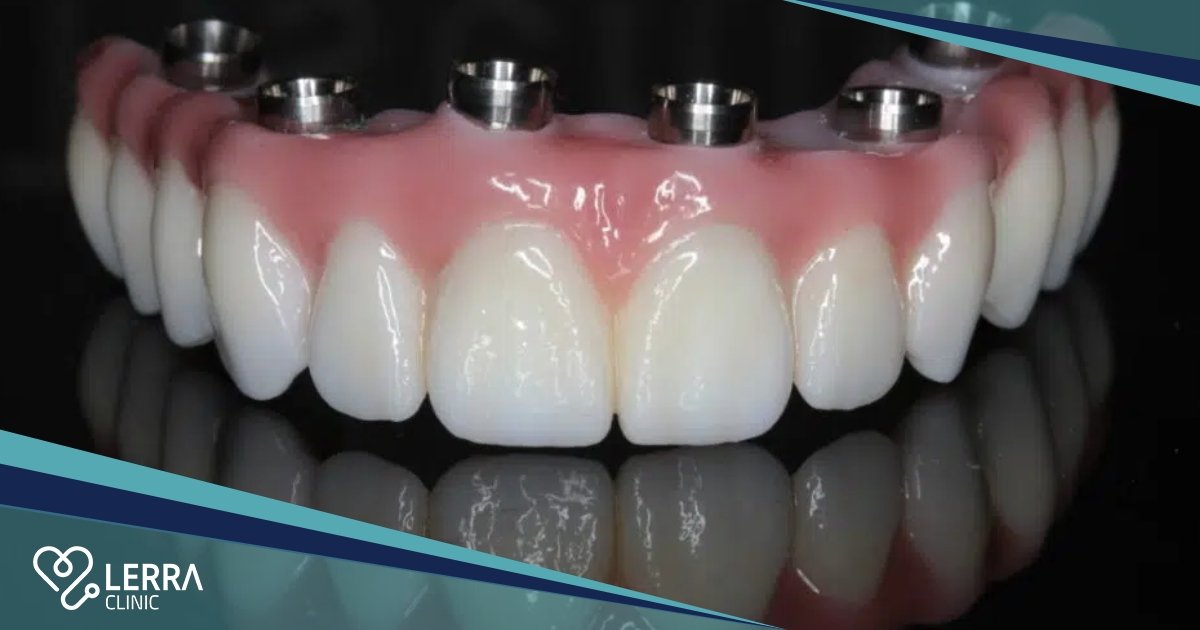
A Simple Explanation
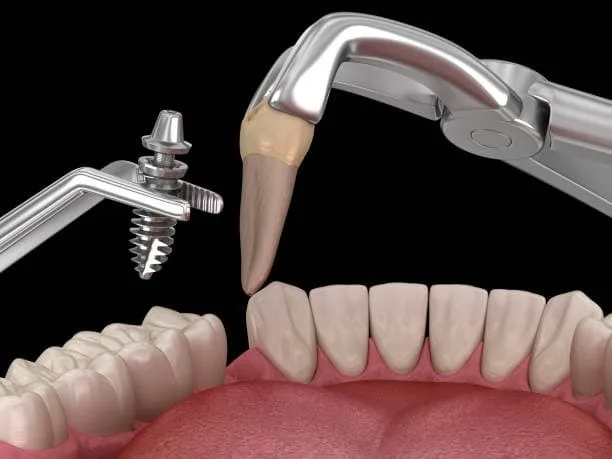
Immediate dental implants—clinically known as Immediate Implant Placement and commonly referred to as same-day dental implants—are an advanced treatment that combines three procedures into a single appointment:
- Extracting the damaged tooth
- Placing a titanium implant immediately into the fresh extraction socket
- Attaching a temporary crown on the same day
There is no need to wait for the extraction site to heal before placing the implant. Instead of separating the treatment into stages over three to six months, tooth extraction, implant placement, and smile restoration all happen in a single visit.
What makes this technique revolutionary is that it takes advantage of the bone’s natural healing response immediately after extraction. At this precise moment, the extraction socket is ideally prepared to receive a dental implant and begin integrating with the surrounding bone.
Immediate implant placement is considered a significant advancement over conventional dental implant treatment, which typically requires a lengthy healing period between tooth extraction and implant surgery.
Table of Contents
Immediate vs. Traditional Dental Implants
| Criteria | Immediate Dental Implants | Traditional Dental Implants |
|---|---|---|
| Initial treatment visits | 1–2 appointments | 3–5 separate appointments |
| Total treatment duration | 3–6 months | 6–18 months |
| Bone preservation | Preserves bone immediately, preventing early bone loss | Bone resorption begins during the healing period |
| Temporary crown | Placed on the same day | No temporary crown; visible gap for several months |
| Appearance during treatment | Natural-looking smile throughout treatment | May require a removable temporary denture |
| Best suited for | Patients with healthy bone and excellent primary implant stability | Patients with insufficient bone volume or severe infection |
How Is the Immediate Dental Implant Procedure Performed? Step by Step
Step 1: Examination and Digital CBCT Treatment Planning
Before surgery, your dentist performs a three-dimensional scan using Cone Beam Computed Tomography (CBCT) to obtain a highly detailed map of your jawbone.
This stage is the foundation of a successful treatment. Digital planning enables the dentist to determine the ideal implant angle, exact depth, and available bone volume while minimizing the risk of human error.
During this planning phase, the temporary crown is also digitally designed so that it is ready to be placed on the day of surgery, eliminating the need for an additional appointment.
Step 2: Tooth Extraction and Immediate Implant Placement
The procedure begins under local anesthesia to ensure complete comfort.
The damaged tooth is carefully extracted while preserving as much surrounding bone and gum tissue as possible.
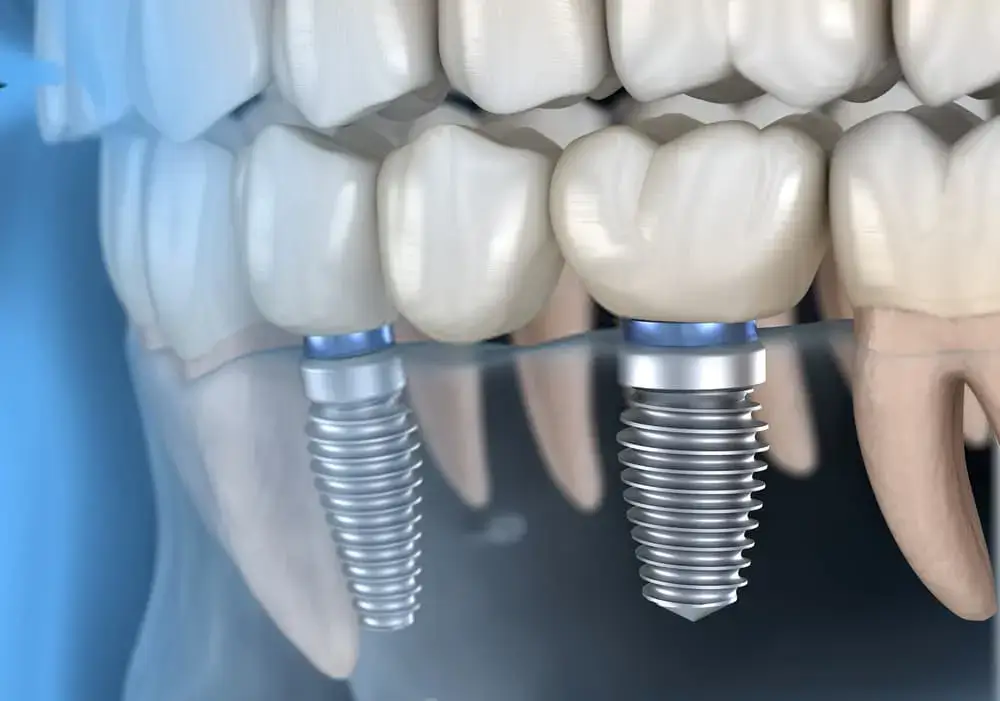
Immediately after the extraction site has been cleaned, the titanium implant is placed directly into the extraction socket.
At this stage, the dentist measures the implant’s primary stability using specialized instruments. This is the most critical point of the procedure, as it determines whether immediate loading is possible.
If the implant achieves sufficient stability—measured in Newton centimeters (Ncm) according to established clinical guidelines—the procedure continues with placement of a temporary crown.
If the required stability is not achieved, the implant site is closed to heal before the crown is placed later. This is a clinical decision based on patient safety, not a treatment failure.
Step 3: Temporary Crown and Healing Phase
When adequate primary stability is confirmed, a temporary crown—typically made from acrylic or composite resin—is attached to the implant during the same appointment, restoring the patient’s smile immediately.
The jawbone then begins a natural biological process called osseointegration, during which living bone cells gradually bond with the surface of the titanium implant at the microscopic level.
Depending on each patient’s healing capacity, this process generally takes three to six months.
Step 4: The Permanent Crown—Completing Your New Smile
Once osseointegration has been confirmed and the implant has fully integrated with the jawbone, the temporary crown is replaced with a permanent restoration.
Permanent crowns are typically fabricated from premium materials such as zirconia or porcelain-fused restorations, carefully matched to the color, shape, and proportions of your natural teeth.
At this point, treatment is complete—from implant to crown—and you can enjoy a fully restored smile without compromise.
Great. I’ll continue with Part 2, maintaining a publication-quality, native English style with H2 headings and accurate dental terminology.
Who Is an Ideal Candidate for Immediate Dental Implants?
Medical Requirements
Immediate dental implants are not suitable for every patient. Determining eligibility requires a thorough clinical examination, digital imaging, and a comprehensive review of your medical history. An experienced implant dentist will assess several key factors before recommending this treatment.
The primary requirements include:
Healthy jawbone
The jawbone must have sufficient density and volume to securely support the implant and achieve strong primary stability. This is the single most important factor in the success of immediate implant placement.
Healthy gums
The gums should be free from active infections and advanced periodontal disease, as these conditions can compromise healing and increase the risk of implant failure.
Good overall health
Patients should not have uncontrolled systemic conditions that interfere with wound healing or immune function, such as poorly controlled diabetes or certain autoimmune disorders.
Commitment to quitting smoking
Ideally, patients should stop smoking before surgery and throughout the healing period. Smoking is one of the leading causes of implant complications and significantly reduces long-term success rates.
When Immediate Dental Implants May Not Be Suitable
In some cases, delaying treatment or choosing an alternative approach is the safer option.
Insufficient bone volume
If the jawbone cannot provide adequate support for immediate implant placement, a bone graft may be required first. Once the graft has healed successfully, the implant can be placed under more favorable conditions.
Severe osteoporosis
Reduced bone density may limit primary implant stability and slow the healing process, increasing the likelihood of implant failure.
Patients receiving radiation therapy to the head or neck
Radiotherapy can reduce the blood supply to the jawbone, making healing less predictable and increasing the risks associated with immediate implant placement.
Heavy smokers who are unwilling to quit
Scientific evidence consistently shows that heavy smoking significantly increases the risk of implant failure, particularly during the early healing phase.
If you’re unsure whether you’re a suitable candidate, the team at Lera Clinic offers a free consultation. By reviewing your dental scans and medical history, they can determine the most appropriate treatment plan for your individual case.
Immediate Dental Implant Success Rates: What Does the Evidence Say?
What the Research Shows
Medical transparency requires an honest answer: immediate dental implants have an exceptionally high success rate, but like any surgical procedure, they are not entirely without risk.
A comprehensive systematic review published in the Dentistry Journal through PubMed/NCBI (Thanissorn et al., 2022) analyzed 1,326 immediate implants across 26 randomized clinical studies. The review reported success rates ranging from 96.7% to 100% when patients were carefully selected according to established clinical criteria.
Another large-scale comparative study published in Clinical and Experimental Dental Research (Chatzopoulos et al., 2025) evaluated 17,278 immediate implants and compared them with 38,738 conventionally placed implants. The findings showed that immediate implants have a slightly higher failure rate—particularly in the upper jaw—highlighting the importance of individualized treatment planning rather than adopting a one-size-fits-all approach.
Similarly, a systematic review and meta-analysis published in MDPI Applied Sciences (2024) concluded that immediate implant placement with immediate loading can achieve clinical outcomes comparable to conventional implant protocols when performed on appropriately selected patients using strict surgical protocols.
Factors That Have the Greatest Impact on Success
According to the internationally recognized International Team for Implantology (ITI) guidelines, the most influential factors include:
Primary implant stability
This is the single most important predictor of success. Measured during surgery with specialized instruments, it determines whether a temporary crown can be safely placed on the same day.
Implant location
Immediate implants placed in the lower jaw generally demonstrate slightly higher success rates than those placed in the upper jaw because the mandibular bone is denser and has a more favorable structure.
Bone quality and density
Dense bone (Types II and III according to the Lekholm & Zarb classification) provides more predictable outcomes than softer, less dense bone.
Patient compliance
Patients who closely follow their post-operative instructions—especially avoiding smoking and limiting pressure on the temporary crown—consistently experience better long-term outcomes.
Advantages and Disadvantages of Immediate Dental Implants
The Benefits: Functional, Aesthetic, and Psychological
Immediate Preservation of Jawbone
When a tooth is extracted without being replaced promptly, the surrounding jawbone begins to shrink within the first few weeks.
Immediate implant placement helps prevent this process by providing mechanical stimulation to the bone from day one, preserving both bone volume and density. This is particularly important for achieving a natural-looking, long-lasting final result.
Preserving the Natural Shape of the Gums
Placing a temporary crown immediately after implant surgery supports the surrounding gum tissue and helps maintain its natural contours.
Research published in the International Journal of Esthetic Dentistry indicates that preserving soft tissue architecture from the outset often leads to superior aesthetic outcomes compared with delayed implant placement.
Restoring Confidence Immediately
One of the most overlooked aspects of tooth loss is its emotional impact.
A missing front tooth can affect self-confidence, cause people to avoid smiling in photographs, and even alter the way they speak without realizing it.
Immediate dental implants eliminate the prolonged period of living with a visible gap, allowing patients to regain their confidence almost instantly.
Fewer Appointments and Less Time Away from Home
For international patients in particular, reducing treatment time is a major advantage.
Instead of scheduling multiple visits over many months—or even more than a year—the primary phase of treatment can often be completed in a single appointment.
Potential Drawbacks and Risks
Higher Initial Cost
Because immediate implant treatment requires advanced planning, specialized surgical techniques, and often same-day temporary restorations, it generally costs more than traditional implant procedures.
However, many patients find that the reduced number of appointments, shorter treatment timeline, and lower travel and accommodation expenses offset much of the additional cost.
Dietary Restrictions During Healing
Temporary crowns are not designed to withstand heavy chewing forces.
Patients should avoid hard, crunchy, or excessively chewy foods throughout the healing period to protect the implant while osseointegration takes place.
Although this restriction is temporary, it requires discipline and careful adherence to post-operative instructions.
Not Suitable for Every Patient
As discussed earlier, patients with insufficient bone volume, severe infections, or certain medical conditions may require bone grafting or an alternative treatment approach.
This does not represent a failure of the procedure—it simply reflects the importance of selecting the right treatment for each individual patient.
Ultimately, the risks associated with immediate dental implants are significantly reduced when the procedure is performed by an experienced implant specialist using advanced diagnostic technology and evidence-based surgical protocols.
Excellent. Here’s Part 3, translated into natural, publication-quality English with a tone suitable for a premium dental clinic website.
Immediate Dental Implants in Istanbul: Why Thousands Choose Turkey
Istanbul: More Than Just a Tourist Destination
Today, Istanbul has established itself as one of the world’s leading destinations for dental tourism, attracting patients from across Europe, Canada, the Middle East, and beyond. This reputation is no coincidence—it is the result of a healthcare system that combines internationally recognized clinical standards, advanced technology, experienced specialists, and exceptional value.
Dental professionals in Turkey are trained according to rigorous standards, with many completing advanced education and continuing professional development in countries such as Germany, the United Kingdom, and other leading European healthcare systems.
The technology used in modern Istanbul dental clinics—including Cone Beam Computed Tomography (CBCT) and CAD/CAM digital dentistry—is the same technology found in many of the world’s top dental centers.
Patients benefit from high-quality treatment delivered with internationally accepted protocols, while enjoying significantly lower overall treatment costs than in many Western countries.
Advanced Technology Used in Istanbul’s Dental Clinics
Leading implant clinics in Istanbul rely on state-of-the-art technology to improve accuracy, safety, and patient outcomes.
These technologies typically include:
- 3D CBCT imaging for precise diagnosis and treatment planning before surgery.
- CAD/CAM digital design systems for manufacturing highly accurate temporary and permanent crowns that closely match the color and anatomy of natural teeth.
- Internationally recognized implant systems from globally trusted manufacturers, widely used by implant specialists around the world.
- Strict sterilization and infection-control protocols that follow international healthcare standards to minimize the risk of complications.
The combination of digital planning, advanced surgical techniques, and premium implant systems contributes to predictable, long-lasting results.
The International Patient Experience: From Arrival to Departure
One of the greatest advantages of receiving dental treatment in Istanbul is the seamless experience offered to international patients.
Rather than arranging every detail yourself, reputable clinics coordinate the entire treatment journey, allowing you to focus solely on your recovery.
At Lera Clinic, international patients receive comprehensive support that includes:
- Airport transfers upon arrival.
- Hotel accommodation close to the clinic.
- Carefully scheduled appointments to fit your travel itinerary.
- Multilingual patient coordinators who assist throughout your stay.
- Ongoing support until your departure.
This fully integrated approach makes dental tourism both convenient and stress-free, giving patients confidence from the moment they arrive until they return home with a restored smile.
Aftercare Tips Following Immediate Dental Implant Surgery
The First 48 Hours: The Most Critical Stage
The first two days after implant surgery play a crucial role in determining how well the implant heals.
Following your dentist’s instructions carefully can significantly improve your recovery and reduce the risk of complications.
During the first 48 hours:
- Eat only soft foods served cold or at room temperature, such as yogurt, soup, mashed potatoes, or scrambled eggs.
- Avoid strenuous physical activity and exercise.
- Beginning on the second day, rinse gently with warm salt water—avoid vigorous rinsing.
- Sleep with your head elevated using an extra pillow or two to minimize swelling.
- Take all prescribed antibiotics and pain medication exactly as directed.
These instructions are essential for promoting proper healing and protecting the newly placed implant.
What to Do—and What to Avoid—During the Healing Period
Recommended
Throughout the healing phase, you should:
- Brush gently around the implant area using a soft-bristled toothbrush.
- Clean between your teeth with dental floss or an oral irrigator where appropriate.
- Attend all scheduled follow-up appointments.
- Maintain a healthy diet rich in calcium and vitamin D to support bone healing.
Avoid
For the best long-term outcome, avoid the following:
- Smoking, which significantly increases the risk of implant failure and delayed healing.
- Biting into hard, crunchy, or chewy foods with the temporary crown.
- Stopping your prescribed medication early simply because you feel better.
- Skipping follow-up appointments, even if everything appears to be healing normally.
Careful adherence to these recommendations greatly improves the chances of long-term implant success.
Remote Follow-Up After Returning Home
One of the hallmarks of a professional dental clinic is that patient care continues long after you leave the clinic.
At Lera Clinic, international patients benefit from an ongoing remote follow-up program designed to monitor healing after they return home.
This includes:
- Reviewing follow-up X-rays taken by your local dentist.
- Answering questions or addressing concerns during the healing period.
- Determining the ideal time to place your permanent crown once osseointegration is complete.
Your treatment journey does not end when your flight home begins—it continues until your final restoration is successfully completed.
Patients are also encouraged to view before-and-after photos of previous implant cases to gain a realistic understanding of the results that can be achieved.
Excellent. Below is the final part (Part 4) of the translation, written in fluent, native English suitable for a premium dental clinic website and optimized for SEO.
Frequently Asked Questions About Immediate Dental Implants
Is Immediate Dental Implant Surgery Painful?
Immediate dental implant surgery is performed under effective local anesthesia, making the procedure itself virtually painless for most patients.
Once the anesthesia wears off, you may experience mild discomfort or soreness for a few days. This is typically well controlled with the prescribed pain medication.
In fact, many patients report that the procedure was far less uncomfortable than they had expected.
How Long Does the Procedure Take?
The implant appointment usually lasts between one and two hours, depending on the complexity of the case.
This includes:
- Tooth extraction
- Preparation of the implant site
- Placement of the titanium implant
- Attachment of the temporary crown (when clinically appropriate)
Although the visible restoration is completed on the same day, full healing and placement of the permanent crown generally takes three to six months—considerably shorter than conventional implant treatment, which may require a year or longer.
Can People With Diabetes Receive Immediate Dental Implants?
Patients with well-controlled diabetes are often suitable candidates for immediate dental implants.
However, your dentist will carefully evaluate your blood sugar control, gum health, and bone quality before recommending treatment.
Patients with poorly controlled diabetes are generally not considered good candidates because elevated blood glucose levels can impair bone healing and increase the risk of implant failure. In such cases, your dentist may recommend an alternative treatment plan until the condition is properly managed.
What Is the Difference Between Immediate Dental Implants and All-on-4?
Although both treatments use dental implants, they serve very different purposes.
Immediate dental implants are designed to replace a single missing tooth or a limited number of teeth, with the implant placed immediately after extraction whenever possible.
All-on-4®, on the other hand, is a full-arch rehabilitation solution for patients who have lost most or all of their teeth in one jaw. Instead of replacing each tooth individually, a complete fixed prosthesis is supported by just four strategically placed implants.
The most appropriate option depends on several factors, including:
- The number of missing teeth
- The amount and quality of available bone
- Your overall oral health
- Your dentist’s comprehensive clinical assessment
Are Immediate Dental Implants Permanent?
With proper care and regular dental check-ups, dental implants can remain functional for 20 years or more, and in many cases, they can last a lifetime.
Long-term success depends largely on:
- Maintaining excellent oral hygiene
- Keeping the gums healthy
- Attending routine dental examinations
- Avoiding smoking
While the titanium implant itself is designed to be permanent, the visible crown may need replacement after 10 to 15 years, depending on normal wear, bite forces, and the material used.
Final Thoughts: Your Smile Deserves an Informed Decision
Immediate dental implants are far more than a faster alternative to traditional implant treatment—they represent a modern approach to tooth replacement that combines efficiency, aesthetics, and long-term function.
By preserving the jawbone from the very first day, maintaining the natural contours of the gums, reducing the number of appointments, and restoring your smile immediately, this treatment offers significant advantages for carefully selected patients.
However, immediate implant placement remains a highly precise surgical procedure. Its success depends on meticulous diagnosis, advanced technology, and the expertise of an experienced implant specialist. Every patient is unique, and treatment decisions should always be based on a comprehensive clinical evaluation—not a one-size-fits-all approach.
If you’re considering immediate dental implants, the best first step is to seek professional advice.
Contact the team at Lera Clinic in Istanbul or reach out via WhatsApp to schedule your free initial consultation. Their specialists will evaluate your case, answer your questions, and create a personalized treatment plan designed to restore both your smile and your confidence.
Scientific References
- Thanissorn C. et al. (2022). Success Rates and Complications Associated With Single Immediate Implants: A Systematic Review. Dentistry Journal, PubMed/NCBI.
- Chatzopoulos G. et al. (2025). Long-Term Survival of Dental Implants: Immediate Versus Delayed Placement. Clinical and Experimental Dental Research, Wiley Online Library.
- Applied Sciences (MDPI). (2024). Immediate Loading of Post-Extraction Implants: Success and Survival Rates: A Systematic Review and Meta-analysis.
- International Team for Implantology (ITI). Clinical Guidelines on Immediate Implant Placement.
- American Dental Association (ADA). Dental Implant Guidelines and Approved Standards.
- World Health Organization (WHO). Infection Prevention and Control Standards in Dental Settings.
Contact us today and get the best offer!
Related Articles
Invisalign Clear Aligners in Turkey
Dental Implants Turkey: Costs, Safety, Reviews & Complete Guide 2026